Ghana’s strong GDP growth masked decades-long productivity decline – Maxwel Opoku-Afari
Ghana’s celebrated economic growth in the decade preceding its debt crisis concealed a more troubling reality: the economy was expanding without undergoing the productivity and structural transformation required to sustain rising debt, according to a new study by former First Deputy Governor of the Bank of Ghana, Dr. M...
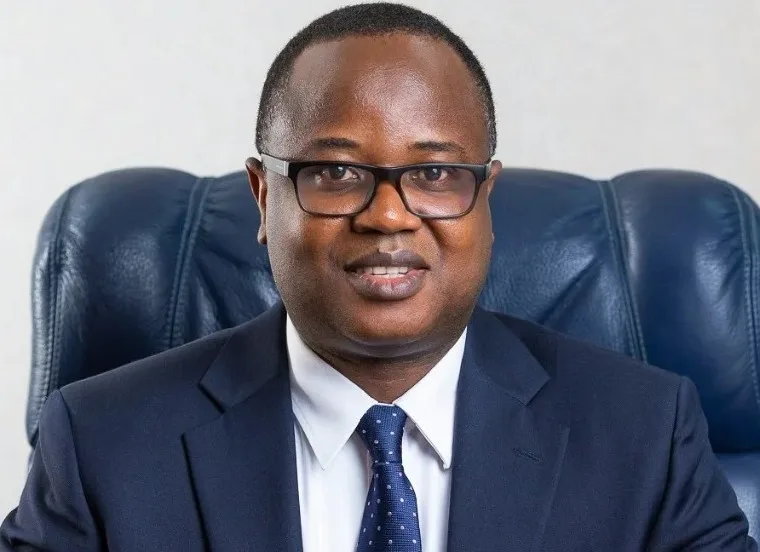
Ghana’s celebrated economic growth in the decade preceding its debt crisis concealed a more troubling reality: the economy was expanding without undergoing the productivity and structural transformation required to sustain rising debt, according to a new study by former First Deputy Governor of the Bank of Ghana, Dr. Maxwell Opoku-Afari.
The study published by the Finance for Development Lab (FDL) finds that Ghana recorded average real GDP growth of about 6.7 percent between 2010 and 2019, significantly outperforming much of Sub-Saharan Africa.
Yet beneath those impressive headline numbers, productivity was deteriorating, exports remained concentrated in a handful of commodities and manufacturing failed to emerge as a sufficiently powerful engine of economic transformation.
The result was an economy that could generate impressive growth rates without expanding its productive and revenue-generating capacity fast enough to comfortably service the debt accumulated alongside that growth.
Dr. Opoku-Afari argues that this disconnect is one of the less appreciated explanations for Ghana’s eventual debt crisis.
Growth without transformation
Following debt relief under the Highly Indebted Poor Countries initiative and the Multilateral Debt Relief Initiative, Ghana entered a period of rapid economic expansion.
Oil production from 2011 added to an economy already benefiting from gold and cocoa exports. GDP growth reached about 14 percent in 2011 and remained around 8 percent in 2017 and 2018.
Between 2010 and 2019, Ghana’s economy expanded by an average 6.7 percent annually, compared with approximately 4.1 percent for Sub-Saharan Africa.
But the composition of that growth mattered.
The paper finds that Ghana continued to depend heavily on gold, cocoa and oil, while labour-intensive manufacturing and other productivity-enhancing sectors failed to expand sufficiently.
Between 2013 and 2024, extractive-sector growth averaged approximately 5.6 percent annually, compared with 4.7 percent for agriculture and 3.3 percent for manufacturing.
Manufacturing accounted for only about 10.8 percent of GDP on average over the period.
This meant that rapid GDP expansion did not produce the fundamental restructuring of the economy needed to diversify exports, create sufficient productive employment and broaden the domestic tax base.
Productivity has been falling for decades
Perhaps the paper’s most striking finding concerns total factor productivity — broadly, the efficiency with which an economy combines labour, capital and technology to produce output.
Dr. Opoku-Afari finds that Ghana’s total factor productivity has been on a persistent downward trend for more than four decades.
That suggests much of Ghana’s economic expansion has depended on adding more labour, capital and natural-resource production rather than becoming significantly more efficient or technologically productive.
He argues that the distinction is critical for debt sustainability. He contends that an economy can borrow to finance development and still remain sustainable if the investment raises future productivity, exports and government revenues sufficiently to repay the debt.
But borrowing becomes increasingly dangerous when debt grows faster than the productive capacity that ultimately supports repayment. That, the study argues, increasingly characterised Ghana.
Borrowing rose as public investment weakened
The composition of government expenditure reinforced the problem.
Despite increasing borrowing, capital expenditure declined significantly as a share of government spending – from 27.5 percent in 2010 to 15 percent in 2016 and 12.8 percent in 2022.
The implication is that a progressively smaller share of public expenditure was going towards investments capable of expanding the economy’s future productive capacity.
At the same time, Ghana became increasingly reliant on commercial borrowing. Between 2007 and 2021, the country raised approximately US$15.59 billion through nine international capital-market issuances.
According to the paper, these Eurobond proceeds were not tied specifically to self-financing projects but largely formed part of general budget financing, including recurrent expenditure.
That distinction is significant. He explained that borrowing to construct productive infrastructure capable of generating economic returns is fundamentally different from repeatedly borrowing at commercial rates to finance existing expenditure commitments.
The latter increases liabilities without necessarily creating a corresponding stream of future income.
Ghana’s debt problem was also a growth-model problem
The analysis therefore reframes Ghana’s debt crisis. It was not simply a story of government borrowing too much. It was also a story of what the economy produced, what government borrowed for, and whether economic growth was sufficiently productive to sustain the resulting liabilities.
The paper notes that Ghana’s sectoral structure changed relatively little between 2013 and 2024.
Agriculture remained around one-fifth of the economy, industry was heavily influenced by volatile extractive activities, and services continued to dominate.
What failed to emerge decisively was higher-productivity, export-oriented manufacturing capable of expanding the country’s foreign-exchange earnings, tax base and employment opportunities.
That weakness became particularly important as debt service increased.
Beyond restoring macroeconomic stability
The findings carry an important message for Ghana’s current economic recovery.
Reducing inflation, rebuilding reserves, controlling fiscal deficits and lowering the debt-to-GDP ratio may restore macroeconomic stability, but they do not by themselves address the structural weakness identified in the study.
For Dr. Opoku-Afari, avoiding another cycle of debt distress will ultimately require Ghana to connect borrowing much more closely to productivity-enhancing investment while expanding the sectors capable of generating exports, jobs and government revenue.
The challenge is therefore larger than bringing debt ratios down. It is about changing the economic model supporting those debts.
Ghana’s experience suggests that strong GDP growth is not necessarily the same thing as a strong economy- particularly when productivity is declining, exports remain concentrated and borrowed resources do not sufficiently expand the country’s capacity to repay.