Free movement is a human right, AU official insists amid slow ratification
The African Union’s Free Movement Protocol is being slowed by security concerns, weak border systems and persistent misconceptions among member states, a senior AU official has said. Dr Ahmed Zanya Bugri, Senior Advisor on Free Movement to the Office of the AU Commissioner, said only four countries have ratified the pr...
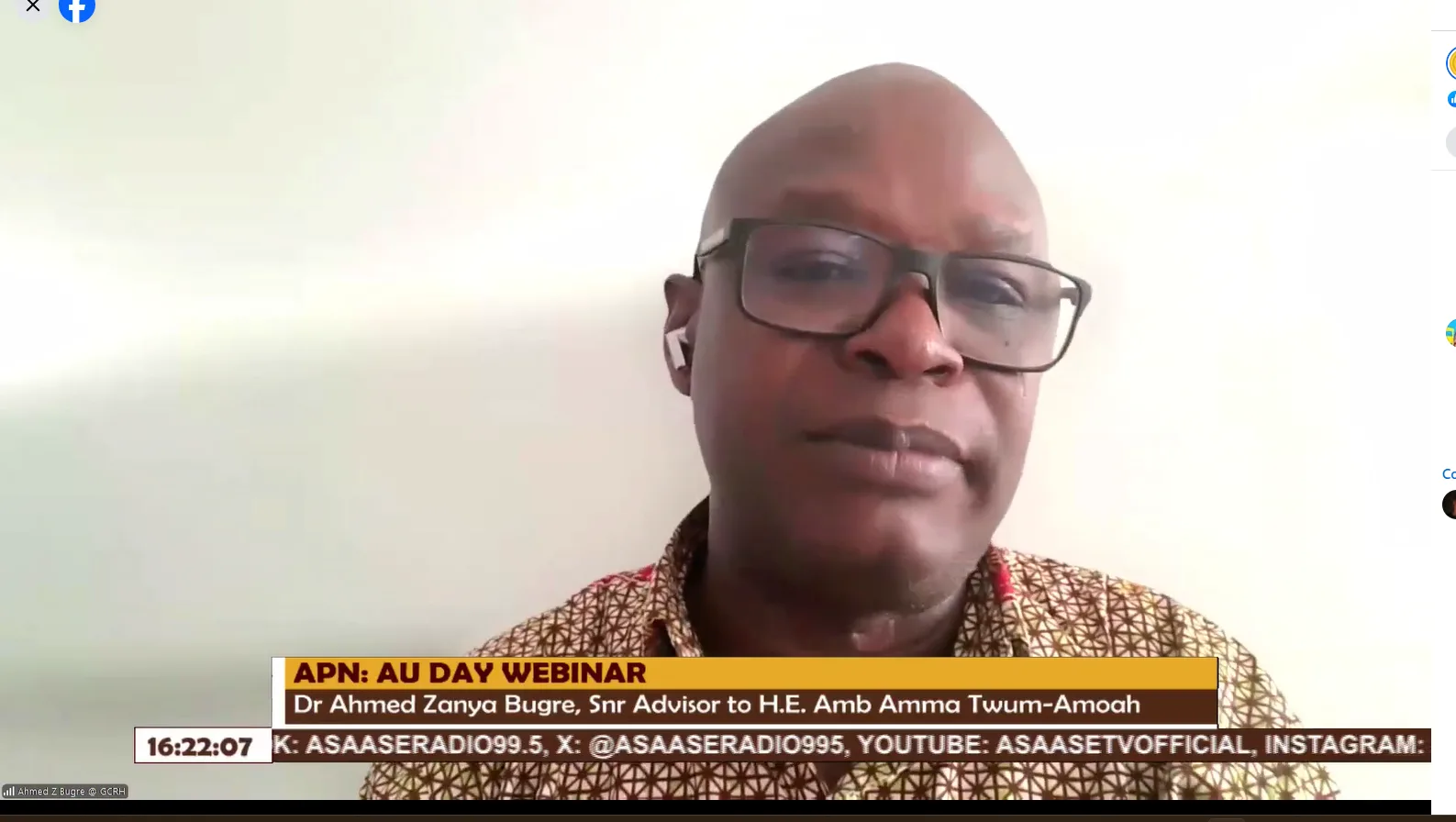
The African Union’s Free Movement Protocol is being slowed by security concerns, weak border systems and persistent misconceptions among member states, a senior AU official has said.
Dr Ahmed Zanya Bugri, Senior Advisor on Free Movement to the Office of the AU Commissioner, said only four countries have ratified the protocol in eight years, despite its importance to continental integration.
He noted that although the Free Movement Protocol and theAfrican Continental Free Trade Area (AfCFTA) were both adopted in January 2019, the trade agreement moved quickly to ratification while the mobility framework lagged behind.
Speaking during an AU Day webinar, Bugri said security remains the primary concern for governments, particularly in relation to cross-border crime and terrorism.
“Security tops the list… especially in light of cross-border crimes and terrorism,” he said, adding that many of the concerns expressed by member states also stem from “misunderstanding” of the protocol’s objectives.
He also pointed to major weaknesses in border infrastructure across the continent, citing cases where neighbouring countries operate incompatible systems that do not communicate effectively.
According to him, this creates inefficiencies at border posts and, in some instances, opens space for unofficial payments and administrative abuse.
Bugri further highlighted concerns about economic disparities between member states, noting fears that freer movement could lead to migration from less developed economies into more advanced ones such as South Africa, Ghana, Nigeria and Rwanda.
However, he said such fears have not been borne out in practice, citing Rwanda’s open-border policy as an example that has not resulted in uncontrolled migration due to effective border management systems.
He stressed that free movement does not mean the absence of borders, but rather “seamless borders” where entry procedures are streamlined and movement within regions is simplified, similar to arrangements in the European Union.
“The right to enter is the right to enter through a port… either an airport or a land border,” he explained, adding that the challenge is that African countries operate fragmented identity and border management systems.
Bugri argued that greater investment in mobility systems, alongside security infrastructure, is necessary if Africa is to achieve meaningful integration.
“There is this misconception that trade can happen without mobility of persons. That is not true,” he said, stressing that labour, skills, investment and entrepreneurship must move freely for integration to succeed.
He also shared a personal reflection from his upbringing in Bawku, near the Ghana–Burkina Faso border, where cross-border movement is part of daily life due to shared family and cultural ties.
According to him, his own family history—spanning Ghana, Burkina Faso and Togo—illustrates how artificial borders often do not reflect lived realities in border communities.
Bugri concluded by calling for stronger coordination between the African Union, regional economic communities, member states, the private sector and civil society to ensure that free movement becomes a lived reality rather than a policy aspiration.