“Golden hours” care saves lives, but system gaps persist — says Dozie Osuoji
Ghana’s emergency care system has seen “significant improvement” in recent years but still faces deep structural and resource challenges that threaten patient outcomes, an emergency physician has said. Speaking on the Asaase Breakfast Show’s health segment hosted by Dr Teddy Totimeh on Thursday (28 May), Dr Kevin Dozie...
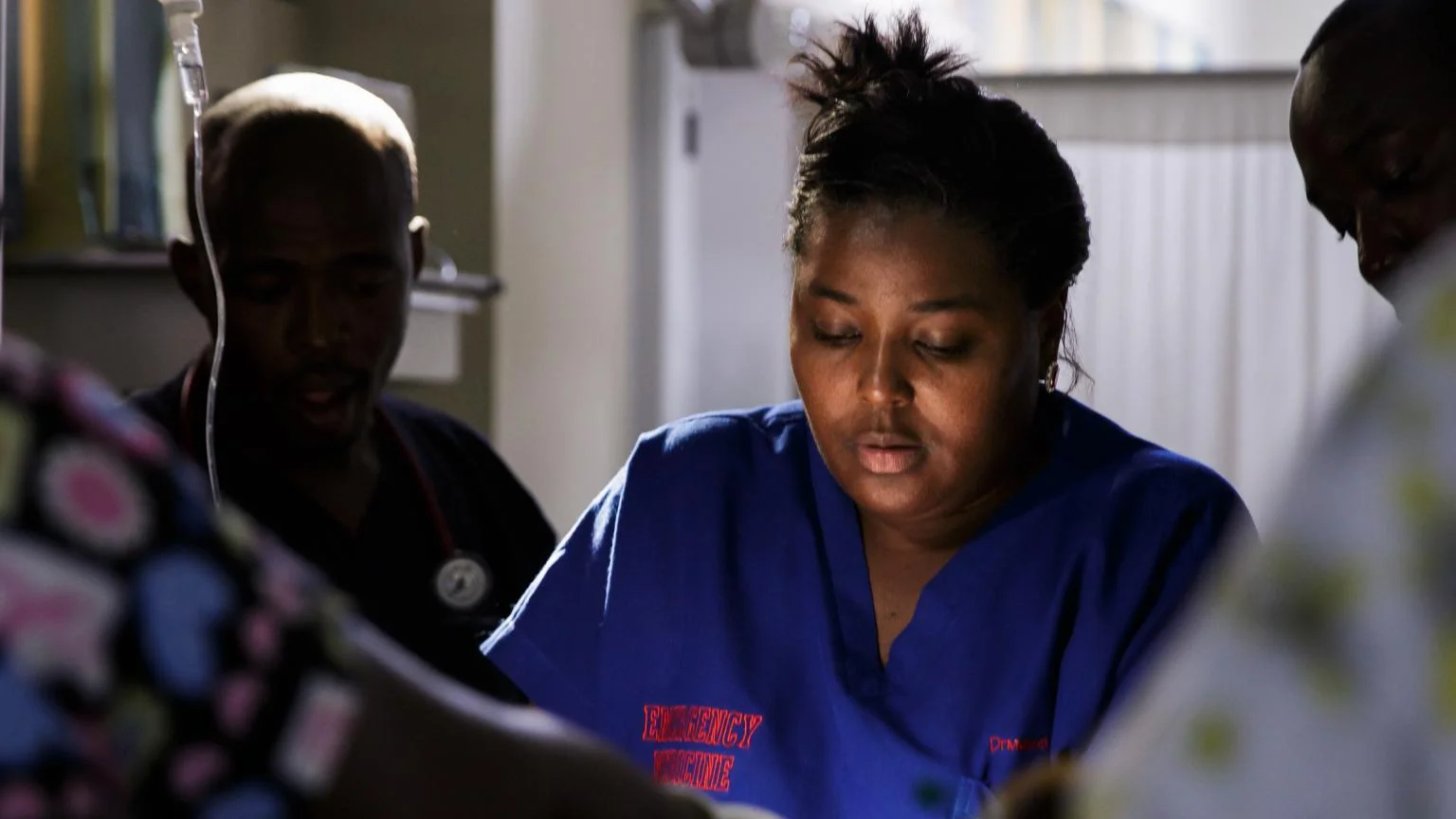
Ghana’s emergency care system has seen “significant improvement” in recent years but still faces deep structural and resource challenges that threaten patient outcomes, an emergency physician has said.
Speaking on the Asaase Breakfast Show’s health segment hosted by Dr Teddy Totimeh on Thursday (28 May), Dr Kevin Dozie Osuojisaid emergency medicine in Ghana has evolved since he became a specialist in 2017, but gaps remain across infrastructure, staffing and critical supplies.
“Emergency care in Ghana has really improved from what it was in 2017… but we still have a long way to go,” Osuoji said.
He described emergency medicine as a high-intensity specialty focused on the “golden hours” of care — the critical window in which rapid intervention can mean the difference between life and death.
“Someone comes in bleeding or breathless and you have to intervene immediately. If you don’t stabilise that patient, the person is going to die,” he said.
Osuoji explained that emergency physicians are responsible not only for resuscitation and stabilisation, but also for coordinating care, managing personnel and resources, and determining the next stage of treatment.
Despite progress, he said the system remains uneven across the country, with newer facilities such as the University of Ghana Medical Centre better structured to support emergency care than older hospitals where the specialty is still being integrated.
He identified key challenges using what he termed the “five Ps” of emergency preparedness — place, personnel, paraphernalia, processes and protocols.
According to him, many facilities still lack adequate space for triage and resuscitation, while trained specialists are not yet widely distributed across regional and district hospitals.
He also pointed to shortages of critical equipment and life-saving drugs, noting that some treatments remain inaccessible due to cost.
“How do you function in an environment where a life-saving drug costs tens of thousands of cedis and the patient must pay before you can administer it?” he asked.
Osuoji further stressed the need for stronger systems and protocols, arguing that emergency care in Ghana often suffers from reactive rather than proactive planning.
“In Africa, we are not big on processes and protocols. We prefer knee-jerk reactions instead of being proactive,” he said.
He also highlighted the strain on healthcare personnel, citing scenarios where limited specialist availability can delay urgent care.
Reflecting on his experience, Osuoji recounted a recent case in which a patient who arrived in cardiac arrest was successfully resuscitated and discharged within days, attributing the outcome to a coordinated “chain of survival” involving multiple hospital staff.
“It was not just about one person — everyone worked together, from the OPD to the emergency unit. That is what saved the patient,” he said.
As part of activities to mark Emergency Medicine Week, he said his team at the University of Ghana Medical Centre had organised public training in basic life support and CPR, as well as awareness campaigns and staff-focused initiatives.
He emphasised the importance of equipping the public with first aid skills, citing a fatal case involving choking that could have been prevented with basic intervention.
“A simple Heimlich manoeuvre could have saved that life,” he noted.
Osuoji called for a holistic approach to strengthening emergency care, stressing that no single factor can be prioritised in isolation.
“You cannot pick one and leave the rest. The system must work together — personnel, equipment, processes — everything,” he said.