Mining law review heads to parliament as government targets stronger regulation and responsible mining
The government has moved a major review of Ghana’s mining regulatory framework closer to completion, with the revised Minerals and Mining Act, Act 703, and the National Mining Policy now before Cabinet and expected to proceed to Parliament, the Minister for Lands and Natural Resources, Emmanuel Armah Kofi-Buah, has ann...
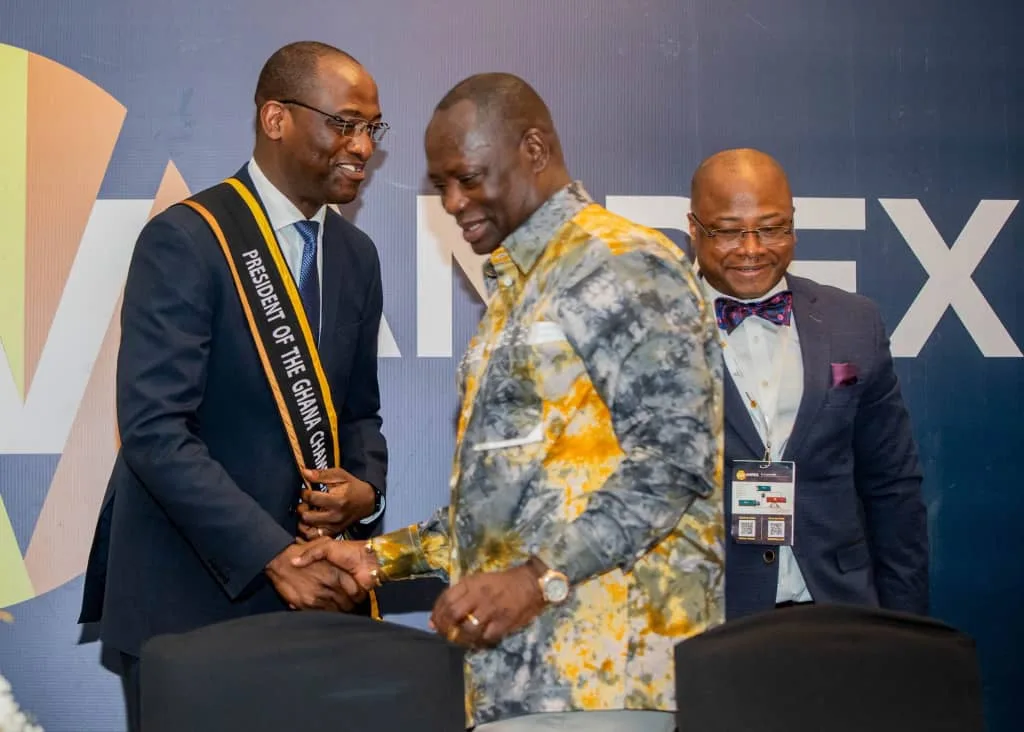
The government has moved a major review of Ghana’s mining regulatory framework closer to completion, with the revised Minerals and Mining Act, Act 703, and the National Mining Policy now before Cabinet and expected to proceed to Parliament, the Minister for Lands and Natural Resources, Emmanuel Armah Kofi-Buah, has announced.
Addressing the 98th Annual General Meeting (AGM) of the Ghana Chamber of Mines (GCM) in Accra on Friday (5 June), the minister said the reforms are designed to strengthen regulatory efficiency, improve accountability, and deepen environmental protection across the mining sector.
The AGM was held on the theme “How Can Responsible Mining Accelerate Ghana’s Development?”
“In fairness to these reforms, I’m very happy to inform you that the Minerals and Mining Act, Act 703, as well as the National Mining Policy that we’ve worked on together for a long time, is currently before Cabinet and is travelling all the way to Parliament,” Armah Kofi-Buah said.
He urged stakeholders to continue engaging with lawmakers as the legislative process unfolds.
“I believe that the review is expected to strengthen regulatory efficiency and upstake accountability and deepen environmental protection and enhance community participation in the mining sector,” he added.
The minister also highlighted ongoing efforts by the Minerals Commission to streamline licensing and permitting processes, describing them as critical measures to reduce delays, enhance transparency, and boost investor confidence.
“These measures are also critical in positioning Ghana as a competitive and predictable mining destination in the West African sub-region,” he said.
A key feature of the reforms, according to the minister, will be tighter regulation and enforcement within the small-scale mining sector to curb environmental degradation while ensuring the industry contributes more meaningfully to national development.
“You will see a strong regulation and enforcement of the small-scale mining sector, and we will see that the government will also make sure the small-scale mining sector is contributing meaningfully to support this economy,” he said.
“We want everybody to do mining, but we want everybody to do mining without destroying our water bodies and our environment and without killing all of us and leaving a future for our future generation.”
Armah Kofi-Buah stressed that the government’s objective is not to target any group of miners but to ensure that mining activities are conducted responsibly and sustainably.
“This is not about fighting a group of Ghanaians but trying to make sure that we get to the point that the practice of mining, whether at the rudimentary level, is being done in a way to protect our environment and to sustain all of us,” he said.
The president of the Ghana Chamber of Mines, Frederick Attakumah, described mining as Ghana’s leading contributor to foreign exchange earnings and outlined three priority areas for the industry: growth, local content development, and environmental, social, and governance (ESG) performance.
“Mining contributes more than gold and oil and gas and all the other sectors put together when it comes to foreign exchange returns,” Attakumah said.
He said the Chamber would continue working with government to create a policy environment capable of attracting both local and foreign investment.
“If you’re able to grow the sector, actually everybody gets more. So that will be the key focus: work with the government to ensure we have a policy environment that attracts the needed investment locally or foreign,” he said.
Attakumah also called for stronger linkages between mining companies and local suppliers to maximise the sector’s impact on industrialisation and job creation.
“We want a situation where we can actually leverage mining to build manufacturing capacity in the country so that that sector also grows, employs people, adds a lot more to the socioeconomic situation in the country,” he said.
The chief executive officer of the Ghana Chamber of Mines, Kenneth Ashigbey, welcomed the government’s posture towards the industry and emphasised the importance of maintaining security of tenure for mining investors.
“When you have the issue of security of tenure, then even for you, the local investor or the foreign investor, you are sure that no matter what happens, once you have materially met the conditions of your lease, whatever extension of lease you require, it’s going to happen,” Ashigbey said.
He cautioned against policy decisions that could undermine investor confidence and reduce growth in the sector.
“We should not take decisions that took oil and gas into decline five consistent years by the policies that we do, but we should take decisions that ensure that there’s partnership between the foreign investor and the local investor,” he said.
Ashigbey also advocated a stronger focus on domestic manufacturing and value addition, arguing that local content should move beyond imports towards production within Ghana.
The AGM brought together government officials, mining executives, and industry stakeholders to discuss how responsible mining can drive economic growth while safeguarding the environment and improving benefits for host communities.