Government targets stronger MSMEs, value-added exports to boost Ghana’s global competitiveness
The Ministry of Trade, Agribusiness and Industry has reaffirmed government’s commitment to creating an enabling business environment for micro, small and medium enterprises (MSMEs) to expand, innovate and compete in global markets. The Director of Foreign Trade and Negotiations at the Ministry, Stella Ansah, said MSMEs...
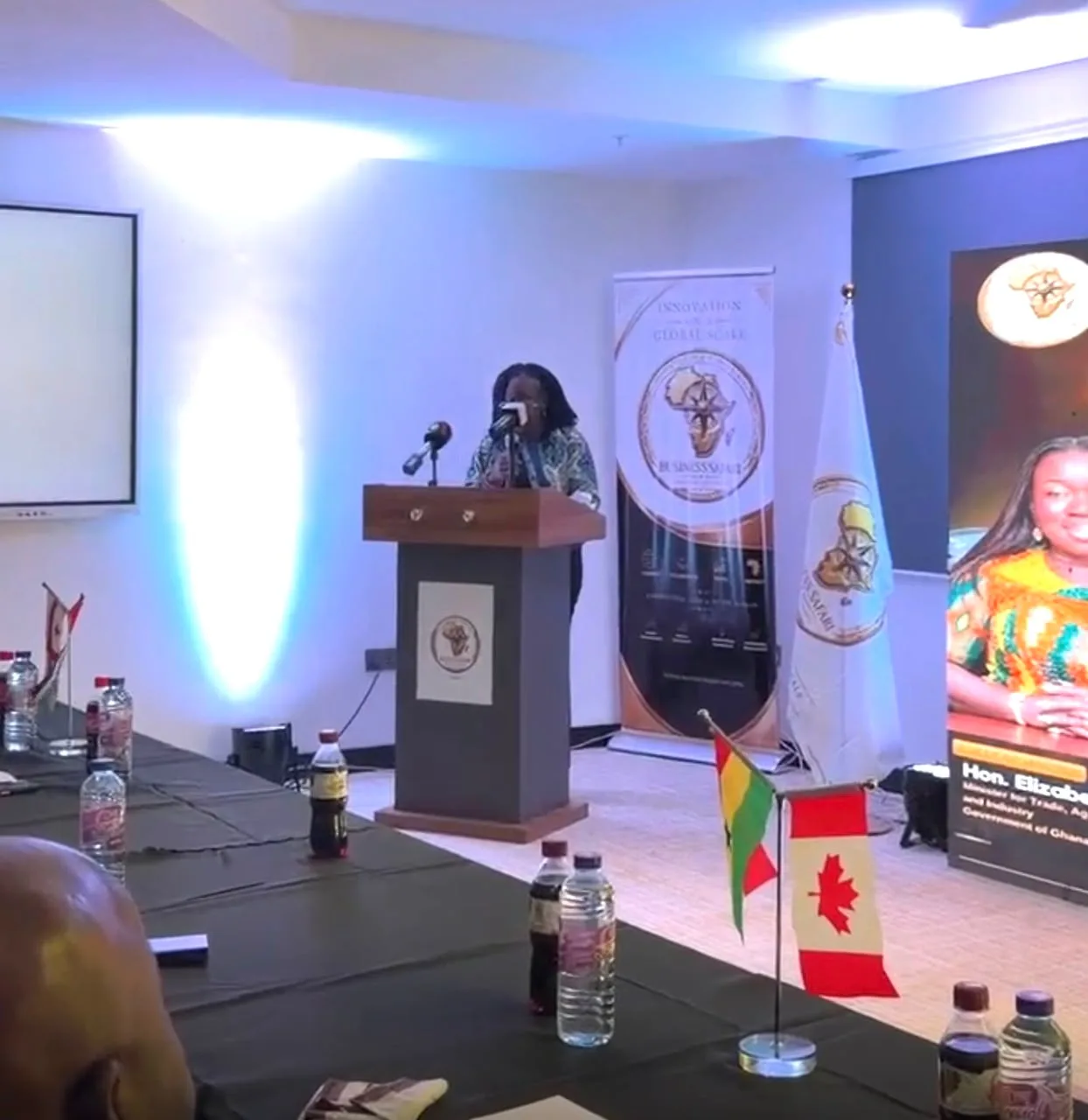
The Ministry of Trade, Agribusiness and Industry has reaffirmed government’s commitment to creating an enabling business environment for micro, small and medium enterprises (MSMEs) to expand, innovate and compete in global markets.
The Director of Foreign Trade and Negotiations at the Ministry, Stella Ansah, said MSMEs account for more than 90% of businesses in Ghana and employ nearly two-thirds of the country’s workforce, making their growth critical to the economy.
Speaking on behalf of the Minister for Trade, Agribusiness and Industry, Elizabeth Ofosu-Adjare, at the 9th edition of the Business Safari organised by the Global Africa Trade Advisory Chamber (GATAC) and GITAC on Thursday, 6 August 2026, Ansah said MSMEs continue to face challenges including access to finance, technology, infrastructure, standards and markets.
“Data shows that MSMEs, that is micro, small and medium enterprises, make up over 90 percent of Ghana businesses. They employ nearly two-thirds of our workforce, yet they are faced with challenges,” she said.
She said government’s responsibility was to create the conditions necessary for businesses to overcome these challenges and compete effectively in regional and international markets.
“At the Ministry of Trade, Agribusiness and Industry, our objective is to build a competitive, industrialised and export-driven economy, one that creates jobs, one that adds value to Ghana’s resources and positions Ghanaian businesses to compete successfully in both regional and global markets,” she said.
Ansah said government is prioritising value addition as part of efforts to increase the economic returns from Ghana’s natural resources and create more jobs locally.
She argued that exporting raw materials deprives Ghana of the opportunity to capture greater value from its commodities.
“Every time we export raw material, we export someone else’s job,” she said.
She cited cocoa beans being exported instead of chocolate, raw cotton instead of finished garments, and shea nuts instead of packaged shea butter as examples of areas where Ghana could increase value addition.
She said Ghanaian-made products should be positioned to compete in major international markets, including Mumbai, Dubai, London, Lagos and the United States.
According to her, the “Made in Ghana” brand should represent quality, innovation and reliability as local businesses expand into international markets.
Ansah said government is also using regulatory reforms and digitalisation to simplify investment processes and reduce administrative barriers confronting businesses.
She said the reforms were intended to create a regulatory environment that rewards innovation and entrepreneurship while making it easier for businesses to move from an idea to an operating enterprise.
She listed the National Agribusiness Policy, the Accelerated Export Development Programme, initiatives to promote non-traditional exports and rapid industrialisation, efforts to bring idle factory capacity back into production, the textiles and garments programme and continued business regulatory reforms among initiatives being pursued.
Ansah also disclosed that Ghana will host an international event in October 2026 for the signing of a new United Nations treaty seeking to harmonise the legal recognition of cargo documents in both paper and electronic form across all modes of transport.
She said the General Assembly has named the treaty the “Accra Convention” in recognition of Ghana’s role in bringing about the agreement.
The convention, she said, is expected to provide greater legal certainty for trade documents in digital form across borders.
She encouraged businesses and other stakeholders to participate in the event, describing it as an opportunity to strengthen Ghana’s position in international trade.
Ansah described the Business Safari as an important platform for connecting enterprises, investors and policymakers and expressed hope that the engagement would translate into concrete investment partnerships.
She said the objective should be to move beyond dialogue and create opportunities for investors to enter into business arrangements with Ghanaian enterprises.
“Let us together, let us invest together, let us innovate together, let us build competitive industries together, and let us connect Ghana. Indeed, Africa can be traded through Ghana,” she said.
The 9th edition of the Business Safari was held under the theme “Innovation on a Global Scale” and brought together investors, entrepreneurs, development partners, business leaders and other stakeholders to discuss opportunities for innovation, trade and investment.