IFS says poor budget execution undermines credibility of 2026 fiscal plans
The Institute for Fiscal Studies (IFS) says the government’s poor execution of the 2026 budget in the first half of the year is undermining the credibility of its fiscal plans and could have implications for economic growth. The analysis comes after Finance Minister Cassiel Ato Forson presented the 2026 Mid-Year Budget...
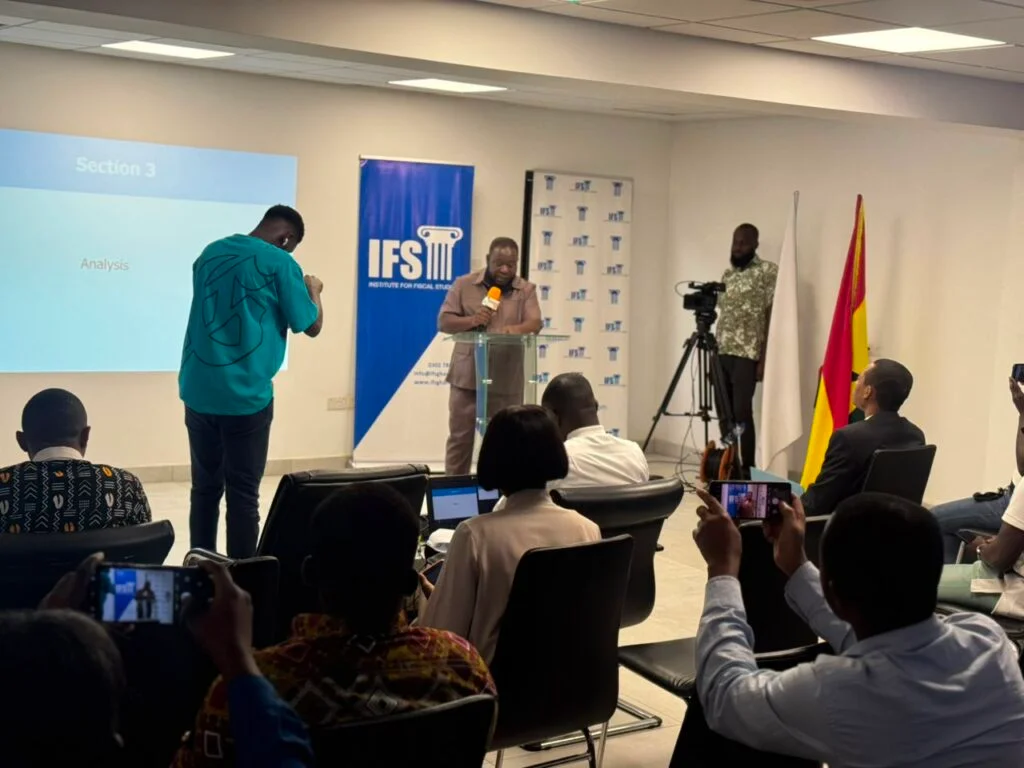
The Institute for Fiscal Studies (IFS) says the government’s poor execution of the 2026 budget in the first half of the year is undermining the credibility of its fiscal plans and could have implications for economic growth.
The analysis comes after Finance Minister Cassiel Ato Forson presented the 2026 Mid-Year Budget Review to Parliament on 23 July, outlining developments in the economy and revisions to the government’s fiscal plans. Presenting its analysis of the government’s 2026 Mid-Year Budget Review in Accra, Executive Director of theInstitute for Fiscal Studies (IFS), Dr Said Boakye, said total government expenditure, including arrears payments and discrepancies, stood at GH¢136.94 billion between January and June. The figure was GH¢35.60 billion, or 20.6 percent, below the government’s budgeted expenditure of GH¢172.54 billion for the period.
According to the IFS, capital expenditure recorded one of the largest shortfalls, with actual spending of GH¢22.18 billion against a target of GH¢36.56 billion. This represents a shortfall of GH¢14.38 billion, or 39.3 percent. Arrears clearance also fell significantly below target. The Institute says net arrears clearance stood at GH¢5.34 billion, compared with the GH¢13.98 billion target, representing an execution rate of only 38.2 percent.
The IFS argues that the under-execution of these expenditure items is particularly concerning because arrears payments provide liquidity to government contractors and suppliers, while capital expenditure is important for economic growth and development.
Dr. Boakye noted that non-oil real GDP growth declined from 7.1 percent in the fourth quarter of 2025 to 6.3 percent in the first quarter of 2026.
The Institute also questioned the government’s decision to maintain the 2026 real GDP growth projection at 4.8 percent in the mid-year review.
The IFS said the projection should have been revised upwards following data showing that Ghana’s economy grew by 6.0 percent in 2025, while real GDP growth in the first quarter of 2026 stood at 6.4 percent. It also described the government’s 16.8 percent target for total revenue and grants as a share of GDP as unrealistic, arguing that the country has consistently failed to achieve similar projections in recent years.
The Institute further identified what it described as inconsistencies in some of the fiscal data contained in the mid-year budget review.
For example, it said the stated first-half revenue and grants target of GH¢126.14 billion does not correspond with the sum of the individual revenue components, which it calculated at GH¢125.43 billion.
The IFS says this creates an unexplained difference of about GH¢712.43 million.
Another major concern raised by the Institute is the lack of a clear strategy to generate fiscal revenue from Ghana’s small-scale gold mining sector.
The IFS said small-scale mining accounted for about 51.5 percent of Ghana’s gold exports in 2025, yet the sector generated little fiscal revenue compared with its contribution to gold production and exports.
It is therefore calling on government to develop a strategy that ensures the state receives a fair share of revenue from the sector.
The Institute is recommending that government improve budget execution by ensuring approved expenditures are implemented in line with the budget plan, except where genuine revenue or financing constraints make this impossible.
It is also calling for more evidence-based economic forecasting, including independent review of government projections before they are incorporated into the national budget.
The IFS further wants government to develop a strategy for mobilising revenue from the small-scale gold mining sector and strengthen the validation and verification of fiscal data to eliminate inconsistencies.