Asaase Radio launches new finance shows to help Ghanaians understand the economy and make better money decisions
Asaase Radio is set to introduce two new finance-focused programmes aimed at helping Ghanaians better understand economic developments, investment opportunities and everyday money decisions. The programmes, Asaase Capital and Money Matta, will be hosted by financial analyst Kweku Adoboli and will take a practical appro...
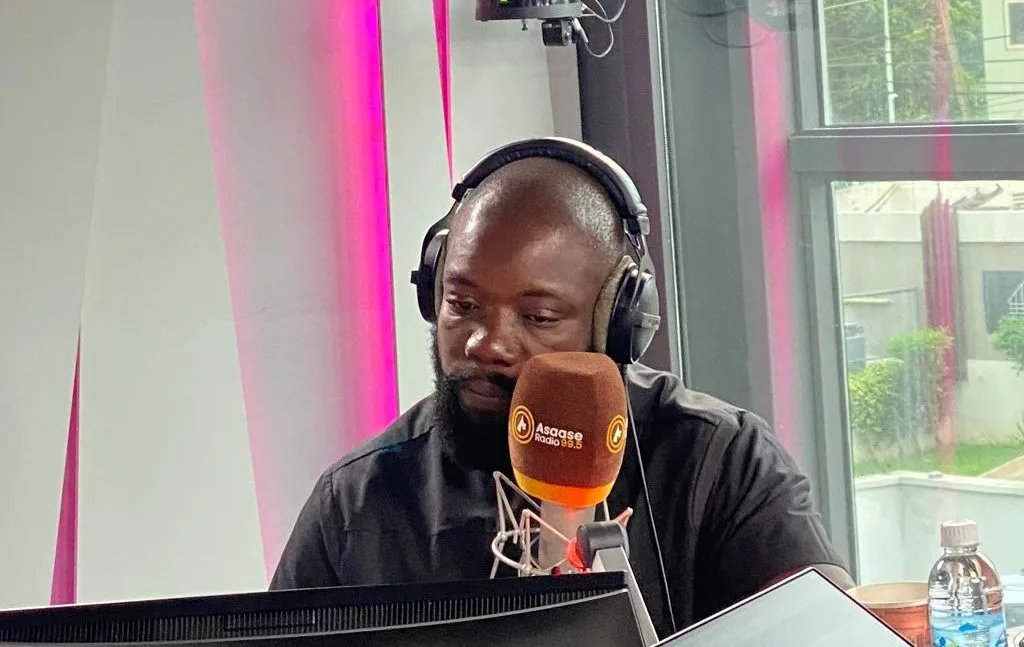
Asaase Radio is set to introduce two new finance-focused programmes aimed at helping Ghanaians better understand economic developments, investment opportunities and everyday money decisions.
The programmes, Asaase Capital and Money Matta, will be hosted by financial analyst Kweku Adoboli and will take a practical approach to financial and economic issues, connecting developments in global markets to their impact on households and businesses in Ghana.
According to Adoboli, the Monday morning Asaase Capital segment will examine the major economic and financial issues likely to shape the week ahead.
The programme will take a top-down approach, beginning with developments in global geopolitics and financial markets before examining their implications for Africa, West Africa and Ghana.
“We are trying to anticipate what the headlines will be later in the week related to economics and finance and money,” Adoboli said.
He said the programme would examine issues including oil, gold, cocoa, the cedi, inflation, global capital markets and geopolitical developments, while ultimately bringing the analysis down to their impact on ordinary Ghanaians.
For example, a discussion on petrol prices could examine how geopolitical tensions and US Federal Reserve decisions affect global oil prices and the strength of the cedi, before looking at Ghana’s petroleum supply chain, taxes, levies and government interventions.
The analysis would then be taken to the household level, examining how changes in fuel prices affect transport fares, food prices, household budgets and productivity.
“We basically go from the macro level all the way down to the micro level, what happens to tro-tro fares and what is the impact on the average Ghanaian,” Adoboli said.
The programme will also monitor developments from institutions including the International Monetary Fund, World Bank and Ministry of Finance, as well as parliamentary discussions, to identify policies and economic developments that could become significant during the week.
The second programme, Money Matta, will air on Tuesday evenings from 7pm to 8pm and will focus on personal finance, investment and ways of growing and managing money.
Adoboli said the programme would seek to make financial information accessible by taking listeners through practical questions, ranging from what to do when money runs out to how to invest savings and generate additional income.
Topics will include savings, borrowing, side hustles, remote work, content creation, foreign exchange trading, investment and capital markets.
The programme will also examine investment opportunities on the Ghana Stock Exchange and other African markets, including exchanges in Nigeria, Kenya, South Africa and Francophone West Africa.
Adoboli said Money Matta would also examine individual companies, financial products and investment opportunities to help listeners understand how their money could be deployed.
The programme will feature conversations with fund managers, regulators, chief executives and entrepreneurs, while examining institutions such as the Securities and Exchange Commission and Bank of Ghana.
Beyond traditional investments, the programme will explore emerging digital financial platforms and areas such as digital gold, commodity trading and other forms of retail investment.
Adoboli said the programme would also address the risks associated with borrowing, including emergency loans and digital lending platforms, while examining ways people could improve their earnings through legitimate side businesses and other opportunities.
The financial analyst said Money Matta would not focus exclusively on formal financial markets.
The programme will also examine informal businesses and side hustles, including trading, food vending, online businesses, drop-shipping and other income-generating activities, with the aim of understanding how much people can realistically earn and what is required to operate such ventures.
It will also explore Ghana’s cultural attitudes towards money, including borrowing, lending, debt repayment and the stigma associated with financial losses.
Adoboli said the broader objective was to help listeners make more informed financial decisions.
The programme’s promotional message captures that approach: “Money Talk becomes Money Action.”