Plastic pollution has spread throughout Odaw River – University of Ghana scientist warns
A postdoctoral researcher at the University of Ghana Institute for Environment and Sanitation Studies (IESS), Dr. Millicent Afi Sitsofe Kwawu, has warned that plastic pollution is now widespread in the Odaw River, with discarded waste breaking down into tiny particles that pose growing risks to ecosystems and public he...
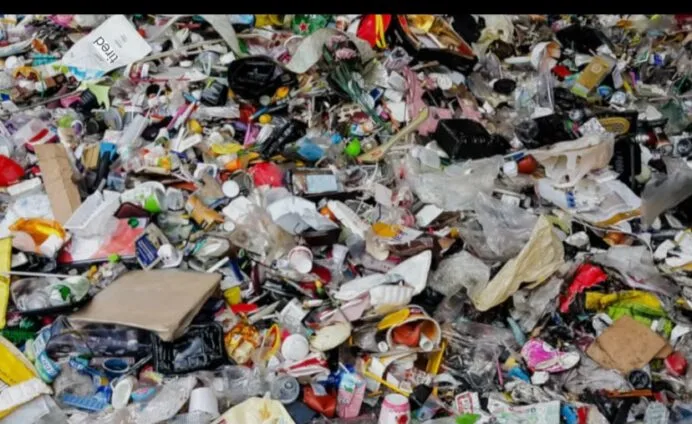
A postdoctoral researcher at the University of Ghana Institute for Environment and Sanitation Studies (IESS), Dr. Millicent Afi Sitsofe Kwawu, has warned that plastic pollution is now widespread in the Odaw River, with discarded waste breaking down into tiny particles that pose growing risks to ecosystems and public health.
Speaking during the second edition of the Loud and Green XSpace, organised by JoyNews and Beyond the Science (BTS) under the theme “Beyond Awareness: What’s Stopping Ghana from Fixing its Plastic Waste Menace?”, Dr. Kwawu shared findings from her PhD research on microplastic pollution in the Odaw River.
According to her, plastic waste dumped on the streets of Accra eventually finds its way into the Odaw River through drainage systems, where it gradually breaks down into microscopic particles.
“There’s plastic almost everywhere in the river,” she said.
Her research traced plastic contamination from the river’s source near Abokobi through Haatso and Achimota to the Korle Lagoon, where many of the microplastic particles accumulate before eventually reaching the sea.
Dr. Kwawu explained that larger plastic items fragment over time into microplastics, some as small as a watermelon seed, which remain in the environment for long periods.
She warned that these particles are capable of carrying other harmful pollutants through aquatic ecosystems.
“These microplastics are able to carry along other pollutants like heavy metals,” she said. “The heavy metals stick onto the microplastics and they are transported into our seas.”
The environmental scientist noted that microfibres from textiles were among the most common forms of microplastics found in the river.
She also observed that while many Ghanaians are aware of plastic waste, public understanding of microplastics and their health impacts remains limited.
“We found that people are aware of plastics, but not so much microplastics and the impacts they have on our bodies,” she said.
Dr. Kwawu stressed that although microplastics are largely invisible, they pose serious environmental and public health concerns.
“The key message from my PhD is that microplastics are very small, but they do have impacts on our ecosystems, our livelihoods and our health,” she said.
Her findings add to growing concerns about pollution in the Odaw River, which drains more than 80 per cent of Accra before flowing into the Korle Lagoon and ultimately the Gulf of Guinea.
She concluded with a stark warning: “Plastic pollution does not disappear. It only changes form.”
T-bills: Government record 20% undersubscription; interest rates continue to rise
Emirates expands operations in Ghana with additional weekly flights