GARH joins World Breastfeeding Week - Calls for stronger support for nursing mothers
The Greater Accra Regional Hospital (GARH), Ridge, has joined the global celebration of World Breastfeeding Week with a call on employers, families and communities to provide stronger support for nursing mothers to enable them to exclusively breastfeed their babies to give them the best start in life. The Medical Direc...
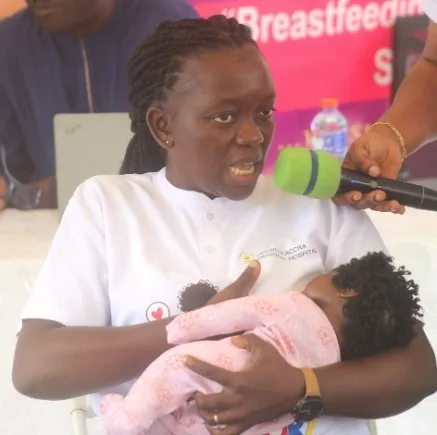
The Greater Accra Regional Hospital (GARH), Ridge, has joined the global celebration of World Breastfeeding Week with a call on employers, families and communities to provide stronger support for nursing mothers to enable them to exclusively breastfeed their babies to give them the best start in life.
The Medical Director of the hospital, Dr Leslie Issa-Adam Zachariah, who made the call, said creating breastfeeding-friendly environments, particularly at workplaces, would remove one of the major barriers preventing many working mothers from practising exclusive breastfeeding for the first six months.
He made the call at the launch of the hospital's activities to mark this year's World Breastfeeding Week in Accra on the theme: "Breastfeeding for a Sustainable Start in Life: Strengthen What Works".
The launch, which took place on Monday, August 3, also honoured mothers who successfully practised exclusive breastfeeding with certificates of recognition.
Dr Zachariah said although breastfeeding required commitment, it should not be regarded as difficult when mothers received the necessary support from their families, employers and health professionals.
Drawing from his personal experience, he said all four of his children were exclusively breastfed, a practice that kept them healthy and saved his family the cost of buying infant formula.
"I didn't have to buy formula food, and I didn't have to struggle with bringing them to the hospital because they were sick," he said.
Dr Zachariah said breast milk contained all the nutrients babies required for healthy growth and development, while strengthening their immune systems and promoting brain development.
He, however, observed that many mothers found it difficult to continue exclusive breastfeeding after returning to work because many institutions lacked facilities that allowed them to breastfeed or express breast milk.
He said health workers would continue to educate the public on the importance of exclusive breastfeeding because many people still underestimated its benefits or believed infant formula was a better alternative.
The Principal Nutrition Officer at the hospital, Dorcas Asante, identified inadequate family and social support as one of the biggest challenges facing breastfeeding mothers.
She said many mothers received conflicting advice from relatives after delivery, making it difficult for them to follow the guidance provided by health professionals.
Ms Asante said pregnant women should attend antenatal clinics with the relatives who would support them after delivery so they could also receive accurate information on breastfeeding.
She said fathers also had an important role to play by helping mothers express and safely store breast milk to reduce stress, particularly during the early months after childbirth.
She explained that stress, poor positioning of babies during breastfeeding and misconceptions about breast milk production continued to discourage many mothers from exclusively breastfeeding.
"The more the baby suckles directly, the more the milk flows," she said, urging mothers to ensure proper attachment of babies to the breast to prevent sore nipples and improve milk production.
The Deputy Director of Nursing Services, Doris Agyei, said breastfeeding was more than feeding a baby, describing it as an investment in the child's health and future.
She said all stakeholders, including health workers, fathers, employers, families and community leaders, had a responsibility to support mothers to breastfeed successfully.
Mrs Agyei said such support would help build healthier families and a stronger nation.
"Every mother supported is a child empowered and every breastfed child is a step towards a healthier nation," she said, urging stakeholders to translate their support into practical action.